Executive Education — On-Campus Courses
Inventory Planning and Management
COURSE DESCRIPTION
If money makes the world go ‘round, inventory makes logistics go ‘round. The planning, storing, moving, and accounting for inventory are the basics of logistics; inventory availability is the most important aspect of customer service; and inventory carrying costs are typically the most expensive and risky aspect of logistics and supply chain management.
Recognition of the critical role of inventory in supply chain management has launched a variety of industry-wide inventory reduction initiatives including lean manufacturing, lean logistics, CPFR, six-sigma, efficient consumer response (ECR), quick response in the textiles industry, continuous flow manufacturing in electronics manufacturing, and just-in-time in auto manufacturing. Despite all these initiatives to reduce inventory in the supply chain – inventory levels for most companies have remained the same or increased. In addition, there remain legitimate, value-added forms of inventory in the supply chain including service inventory, EOQ inventory, pipeline inventory, contingency inventory, safety stock, efficient manufacturing inventory, and efficient procurement inventory.
Managing these inventories to simultaneously increase fill rates and inventory turns is the basis for the principles featured in this course. We address in turn inventory terms and notations, inventory management performance measures, inventory activity profiling and data mining, forecasting best practices and systems, order quantity engineering, replenishment schemes, fill rate and safety stock optimization, procurement and purchasing, deployment strategies, inventory organization requirements, and inventory management system alternatives.
DIRECTOR
Edward H. Frazelle, Ph.D., founding director of the Supply Chain & Logistics Institute (SCL)
at Georgia Tech and President and CEO of Logistics Resources International,
directs SCL’s certificate program, the Logistics Management Series. As
an educator, Dr. Frazelle has trained more than 20,000 professionals in the
principles of world-class logistics and has assisted more than 100 corporations
and governmental agencies in the U.S., Canada, Europe, Japan, and South America
in their pursuit of world-class logistics. He has authored, co-authored, and
contributed to eight books and has written numerous articles on logistics which
have appeared in various professional publications. He is a popular speaker
at logistics conferences and symposiums both in the U.S. and abroad.
Dr. Frazelle’s achievements have been recognized by the Council of Logistics Management (Doctoral Research Grant), the Warehousing Education and Research Council (Burr Hupp Fellowship), the Material Handling Institute (MHEF Fellowship), the Institute of Industrial Engineers (Armstrong Award), and Kodak (Educational Grant Award).
As the valedictorian graduate from North Carolina State University, Dr. Frazelle
received the M.S. degree from the School of Industrial Engineering. He continued
his studies at the Georgia Institute of Technology and received the Ph.D. degree
in Industrial and Systems Engineering. Following his graduation from Georgia
Tech, he served on the faculty and subsequently established the Supply Chain & Logistics Institute,
the world’s largest center for logistics education and research. He continues
to be an integral part of SCL’s educational program.
LOGISTICS MANAGEMENT SERIES APPROACH TO EDUCATION
Less than one-third of all logistics projects are successful. Logistics productivity in the United States is stagnant. Logistics technology is not delivering satisfactory business results and in many cases is counterproductive. One major contributing factor to the lack of success in logistics initiatives is that most professionals working in logistics are not educated in logistics. In fact, less than 5% of the professionals working in logistics have an undergraduate, graduate, or professional logistics degree. The Logistics Management Series was created to close the educational gap in logistics. The four comprehensive educational courses help prepare logistics professionals for current and future logistics problem solving situations. It was specifically designed for logistics professionals and managers, across the entire supply chain (procurement, manufacturing, distribution, transportation, warehousing, and retail), who need university-based education and credentials to prepare them for increasing responsibilities in logistics and supply chain management.
LOGISTICS STUDY TOURS
A facility tour culminates each course offering allowing attendees to see
first hand the benefits of deploying comprehensive logistics strategies. The
techniques and methodologies covered by Dr. Frazelle are illustrated by touring
a distribution facility that is optimizing innovative strategies and advanced
systems in logistics management such as dynamic picking systems, voice activation
technologies, complex material handling systems, electronic repair services,
and advanced productivity management systems.
COURSE OUTLINE
The Role of Inventory Management in Logistics and Business
a. Inventory Master Planning
b. Supply Chain Inventory Management
c. Manufacturing Inventory Management
d. Distribution Inventory Management
e. How to Recognize and Reduce Each Inventory Type
Inventory Management Facts and Fundamentals
What You Really Need to Know about Inventory Planning & Management
a. The Bullwhip Effect and How to Counteract It
b. Push vs. Pull Techniques and How to Decide
c. How to Handle Stockouts
Inventory Activity Profiling and Data Mining
How to Analyze Inventory Data to
Reduce Inventory Carrying Costs and Increase
Customer Service Levels
a. Inventory Value Analysis
b. Inventory Data Mining Techniques
c. How to Eliminate and Rationalize SKUs and Customers
d. Key Pareto Analyses for Inventory Reduction
Inventory Performance, Cost and Value Measures
a. Financial Measures of Inventory Performance
i. Gross Margin Return on Inventory
ii. Inventory Cost to Sales Ratios
b. Productivity Measures of Inventory Performance
i. Inventory Turns
ii. Inventory Days On Hand
c. Quality Measures of Inventory Performance
i. Perfect Order Percentage
ii. Fill Rate Measures and Benchmarks
iii. Inventory Quality Ratio
iv. How to Measure and Improve Inventory
Accuracy
v. Forecast Accuracy
d. Benchmarks for Inventory Performance
Forecasting Tips, Tricks,
Techniques, and Technology
a. How to Reduce, Measure and Manage Demand Variability
b. Collaborative Forecasting
c. How to Improve Forecast Accuracy
d. How to Forecast for Seasonality, Promotions, and Slow
Moving Items
e. How to Measure and Correct Forecast Bias
f. Best-Fit Forecasting Techniques and Systems
Order Quantity Engineering
a. How to Measure and Reduce Purchase Order Costs
b. Economic Order Quantity Applications
c. How to Set Optimal Order Quantities
d. How to Reduce Supply Chain Lead Times
e. How to Reduce Manufacturing Setup Times
Safety Stock Optimization and
Fill Rate Planning
a. How to Determine Optimal Safety Stock Levels
b. How to Determine Optimal Service Levels
Inventory Control Policies
a. How to Set and Manage Reorder Points
b. Continuous Replenishment Systems
c. Network Control Policies
i. MRP
ii. DRP
d. Collaborative Planning, Forecasting & Replenishment
(CPFR)
Inventory
Deployment
a. Cycle Counting Methods
b. Dynamic Deployment
c. Global Inventory Visibility
d. Four-Wall Inventory Management
e. Postponement Principles
WHAT ATTENDEES ARE SAYING
"Dr. Frazelle's principles of logistics problem
solving have been instrumental in our dramatic reductions in inventory and
increases in customer service levels."
- Scott Fleener, Vice President, Supply Chain
Management,
QWEST Communications
"Dr. Frazelle makes logistics theory practical.
He puts logic back in logistics."
- Carliss Graham, Director,
Transportation, BP
Every effort is made to present the course as advertised herein; however, circumstances may make it necessary to alter the schedule and/or presenters.
REGISTRATION
- ON-LINE: Register Online via the GT Executive Education website.
- FAX: Send the registration form along with your credit card information to (404) 894-8925. This line is available 24 hours a day.
- MAIL:
Georgia Institute of Technology
Executive Education—R
P.O. Box 93686
Atlanta, Georgia
30377-0686 - CALL: (404) 385-3501 between 9:00a.m. and 4:00p.m., Eastern time. Have your credit card and registration form handy to aid in this process.
PROGRAM FEE
The program fee of $3900 includes continental breakfasts, lunches, breaks, and all classroom materials. Checks made payable to Georgia Tech are accepted for payment, as well as VISA, MasterCard, American Express, or Discover cards. Note that your credit card will be charged as soon as your registration is received. Registrants should make payment arrangements prior to the start of the program. Advance payment arrangements are required to guarantee your place in the program. If a program registrant must cancel, a substitution or transfer to another program can be made.
If the Supply Chain & Logistics Institute must cancel a program, registrants will receive a full refund. Georgia Tech, however, cannot assume the responsibility for other costs incurred. Due to program enrollment limits, early registration is encouraged. Registrations will be acknowledged by a letter of confirmation from Executive Education.
DISCOUNTS
A discount is applicable to:
- SCL Alumni (anyone who has attended a SCL course): $3575
- CSCMP (Council of Supply Chain Management Professionals), AST&L, INFORMS, NASSTRAC, and the Atlanta Supply Chain Leadership Council. : $3575
- Education Partners: $3150
PROGRAM LOCATION AND ACCOMMODATIONS
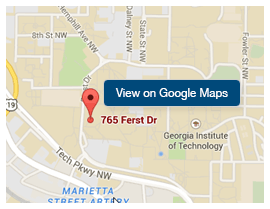
This program will be held at the Georgia Tech Global Learning Center located at 84 5th Street, NW, Atlanta, Georgia. The GLC is the new home for all SCL courses at Georgia Tech. Visit the Global Learning Center at http://www.gatech.edu/techsquare/.
To receive the discounted room rate, registrants must call the hotel at (800) 706-2899 and indicate their association with the Georgia Tech program. Reservations made through a travel agency will not be discounted.
CONTINUING EDUCATION UNITS
This program meets criteria for the nationally accepted Continuing Education Unit (CEU). Each participant completing the program will earn 2.4 CEUs and a program certificate. A certificate of completion, showing the accumulated CEUs earned, can be requested by emailing ceu-request@dlpe.gatech.edu.
CERTIFICATE PROGRAM
Participants who complete multiple SCL courses can qualify for the Supply Chain & Logistic Certificate. Learn More
CANCELLATION AND REFUNDS
To cancel your registration and receive a full refund, you must call Executive Education at (404)385-3501 at least 10 business days prior to the course start date. A course cancellation received fewer than 10 days prior to the course start date will be refunded the registration amount, less $50 to cover the costs of materials and facilities. If you do not call Executive Education to cancel your registration and do not attend the course, you are still responsible for the full registration fee.