
Entanglement and Quantum Metrology in Quantum Materials
Abstract: Quantum systems introduce fundamentally new principles for computing, sensing, and applications in materials and chemistry. A defining distinction between quantum systems and their classical counterparts is the presence of entanglement, particularly multipartite entanglement involving many particles. The rapidly developing field of quantum materials therefore calls for increasingly precise metrological approaches to characterize and ultimately control such entanglement. While foundational advances, including Bell tests and many-body interferometry, were first established in quantum optics and few-body quantum simulators, extending these concepts to complex many-body states at the scale of materials remains a major challenge.
In this talk, I will introduce the entanglement-witness framework as a practical route for characterizing entanglement through experimentally accessible macroscopic observables in solid-state materials. This framework generalizes the underlying logic of Bell tests to macroscopic many-body systems. Recent advances include the detection of spin entanglement in quantum magnets using neutron scattering and spin-orbital entanglement using resonant inelastic X-ray scattering. I will then move beyond distinguishable local degrees of freedom and consider entanglement among indistinguishable fermions. This motivates a more general framework for multipartite electronic entanglement based on the cumulant reduced density matrix and nonlinear spectroscopic responses.
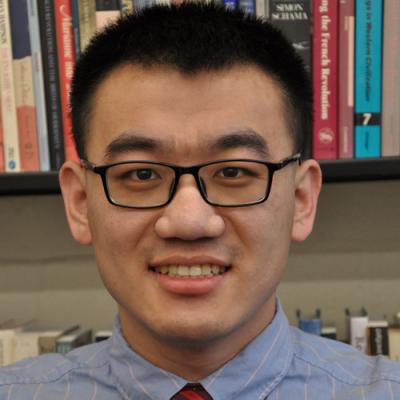
Bio: Yao Wang is an Associate Professor at Emory University. He received his bachelor's degree from the University of Science and Technology of China in 2011 and his Ph.D. from Stanford University in 2017. He then worked at Harvard University as an MPHQ Postdoctoral Fellow. In 2020, he began his independent career as an Assistant Professor at Clemson University, where he later became a College of Science Dean's Assistant Professor. He moved his group to Emory University in August 2023 and received tenure in 2026. His research focuses on the theoretical and computational study of quantum many-body problems and their experimental connections in solid-state materials and quantum science. He is a recipient of the DOE Early Career Award, the AFOSR Young Investigator Award, and a Scialog Fellowship.